The Stanford STORM Method: How to Make Claude Research Like a PhD in Minutes
本页介绍了用4个提示词在Claude中复现斯坦福STORM研究法,从而在5分钟内从多角度深入分析任何主题的方法。
Most people use Claude like a search box. Ask, answer, close tab. They are leaving the best feature locked.
大多数人用Claude就像用搜索框一样——提问、回答、关标签页,却把最棒的功能锁在门外。
Save this :)
保存这个 :)
Stanford built a research system called STORM. In peer reviewed testing it produced articles 25 percent more organized than the next best method. It is open source. It is free. Almost nobody knows you can run the same idea inside Claude with 4 prompts.
斯坦福大学构建了一个名为STORM的研究系统。在同行评审测试中,它生成的文章比次优方法组织性高出25%。它是开源的,并且免费。几乎没人知道,你可以在Claude中用4个提示词运行同样的思路。
No software. No GitHub. No setup. Just paste. 5 minutes from now you will know more about your topic than people who spent days reading.
无需软件。无需GitHub。无需设置。只需粘贴。5分钟后,你对自己主题的了解将超过那些花费数日阅读的人。
Here is the full method.
以下是完整的方法。
Phase 1: What STORM Actually Is
第一阶段: STORM 究竟是什么
STORM stands for Synthesis of Topic Outlines through Retrieval and Multi perspective Question Asking. It was published at NAACL 2024 by the Stanford OVAL Lab.
STORM 代表 通过检索与多视角提问合成主题大纲(Synthesis of Topic Outlines through Retrieval and Multi perspective Question Asking)。该研究由斯坦福 OVAL 实验室发表于 NAACL 2024。
You can try the live version at storm.genie.stanford.edu. Free. No sign up. Type a topic and watch it write a sourced article in front of you.
你可以在storm.genie.stanford.edu尝试在线版本。免费。无需注册。输入一个主题,然后看着它在你面前写出一篇带来源的文章。
A 12 minute walkthrough video is here: STORM by Stanford on YouTube. Worth watching once.
这里有一个12分钟的演示视频:YouTube上的Stanford STORM。值得一看。
The full code is at github.com/stanford-oval/storm. MIT license. Run it on your own laptop if you want.
完整代码在 github.com/stanford-oval/storm。MIT 许可证。如果你想的话,可以在自己的笔记本电脑上运行。
But here is the real prize. You do not need any of it. The Stanford method is just a way of thinking. You can run that same thinking inside Claude with 4 copy paste prompts.
但这里才是真正的奖赏。你根本不需要它。 斯坦福方法只是一种思维方式。你可以在Claude内部运行同样的思维方式,只需4次复制粘贴提示。
That is what the rest of this article is.
本文的其余部分便是如此。
Phase 2: Why One Prompt Will Always Fail
第二阶段:为什么单个提示总会失败
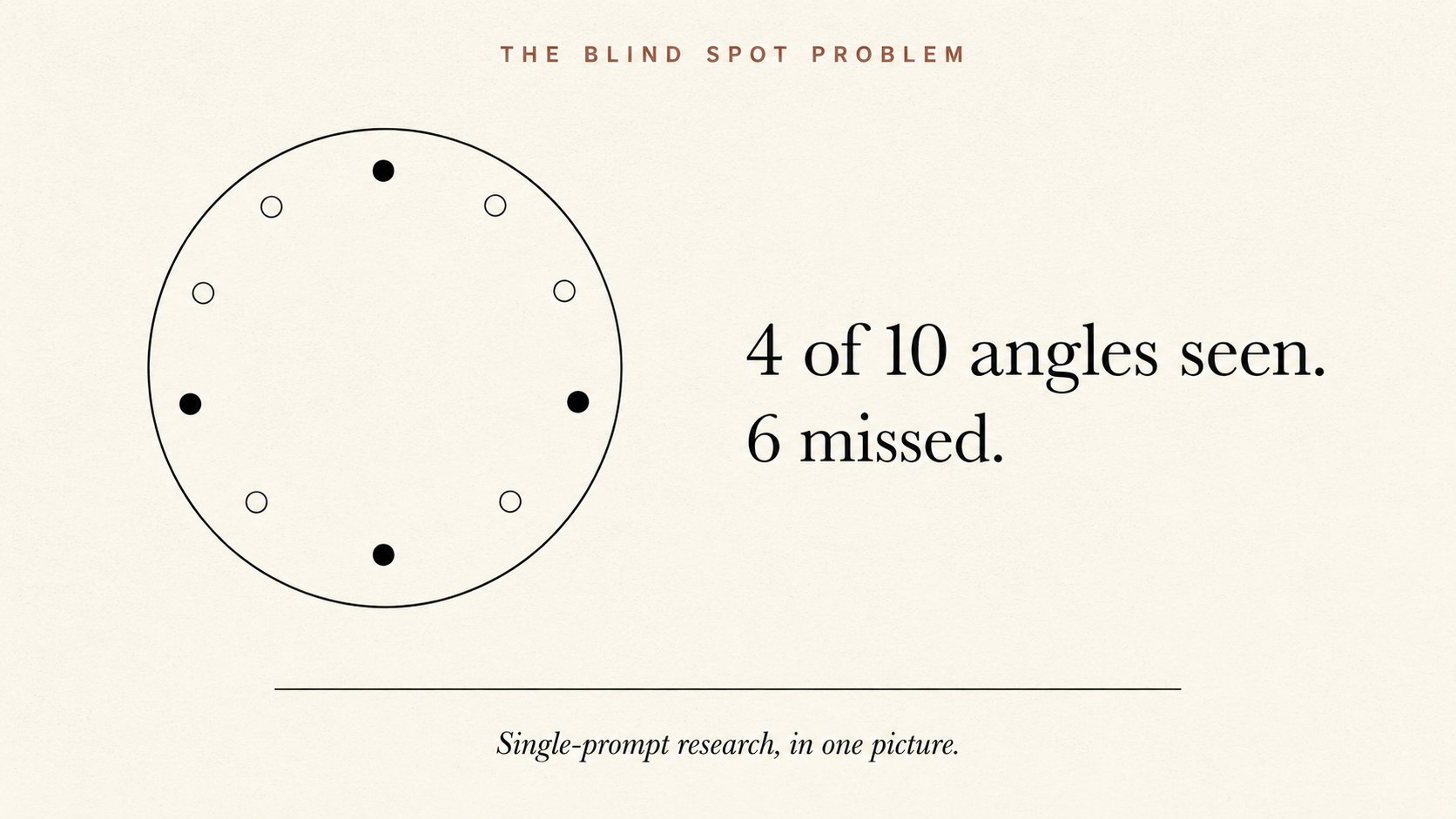
When you ask Claude “tell me about X” you get the majority view. The most common framing. The surface.
当你问Claude“给我讲讲X”时,你得到的是主流观点、最常见的框架和表面内容。
What you do not get is the practitioner who works with X every day. The skeptic who thinks the field is wrong. The economist who follows the money. The historian who has seen the pattern before. The academic who actually read the studies.
你未能理解的是那些每天与X打交道的从业者。认为这个领域错了的怀疑论者。追踪资金流向的经济学家。见过这种模式的历史学家。真正读过研究论文的学者。
Those five voices all see different things. That is what a PhD student does. They do not ask one question. They ask five.
那五个声音看到了不同的东西。这就是博士生的工作。他们不会只问一个问题,而是会问五个。
The Stanford paper proved this with numbers. Articles built from multiple perspectives were 25 percent more organized and 10 percent broader in coverage than articles built the normal way. That is the entire breakthrough. Multi perspective questioning catches blind spots that single prompt research never sees.
斯坦福大学的论文用数据证实了这一点。从多角度构建的文章比常规方式构建的文章组织性提升25%,覆盖范围扩大10%。这就是全部的突破所在。多角度提问能捕捉到单一提示研究所永远无法发现的盲点。
A PhD level research job takes 40 to 60 hours of human reading. Most people cannot spare that. STORM compresses it. The four prompts below compress it further. Five minutes total.
博士级别的研究工作需要40到60小时的人工阅读。大多数人无法抽出这么多时间。STORM将其压缩。下面的四个提示进一步压缩。总共只需五分钟。
Phase 3: Prompt 1, The Multi Perspective Scan
阶段3:提示1,多视角扫描
This is the heart of the method. Paste this into Claude. Replace the topic in line 1.
这是方法的核心。将其粘贴到Claude中。替换第1行的主题。
I need to research [YOUR TOPIC].
Simulate 5 different expert perspectives on this topic:
1. THE PRACTITIONER: works with this daily.
What do they know that academics miss?
What practical realities are usually ignored?
2. THE ACADEMIC: has studied this for years.
What does the peer reviewed evidence actually say?
Where does the evidence contradict popular belief?
3. THE SKEPTIC: thinks the mainstream view is wrong.
What is the strongest counterargument?
What evidence do proponents conveniently ignore?
4. THE ECONOMIST: follows the money.
Who profits from the current narrative?
What financial incentives shape the research?
5. THE HISTORIAN: has seen similar patterns before.
What historical parallels exist?
What can we learn from how those played out?
For each perspective give me:
- Their core position in 2 sentences
- The strongest evidence supporting their view
- The one thing they would tell me that no other perspective would
What comes back: five very different reads of the same topic. The practitioner sees what the academic misses. The skeptic challenges what the practitioner assumes. The economist exposes incentives the academic ignores. The historian provides patterns the economist cannot see.
What comes back: five very different reads of the same topic. The practitioner sees what the academic misses. The skeptic challenges what the practitioner assumes. The economist exposes incentives the academic ignores. The historian provides patterns the economist cannot see.
This is 60 seconds of work that catches what one prompt never finds.
这是只需60秒的工作,就能捕捉到单个提示永远找不到的东西。
Phase 4: Prompt 2, The Contradiction Map
第四阶段:提示 2,矛盾图
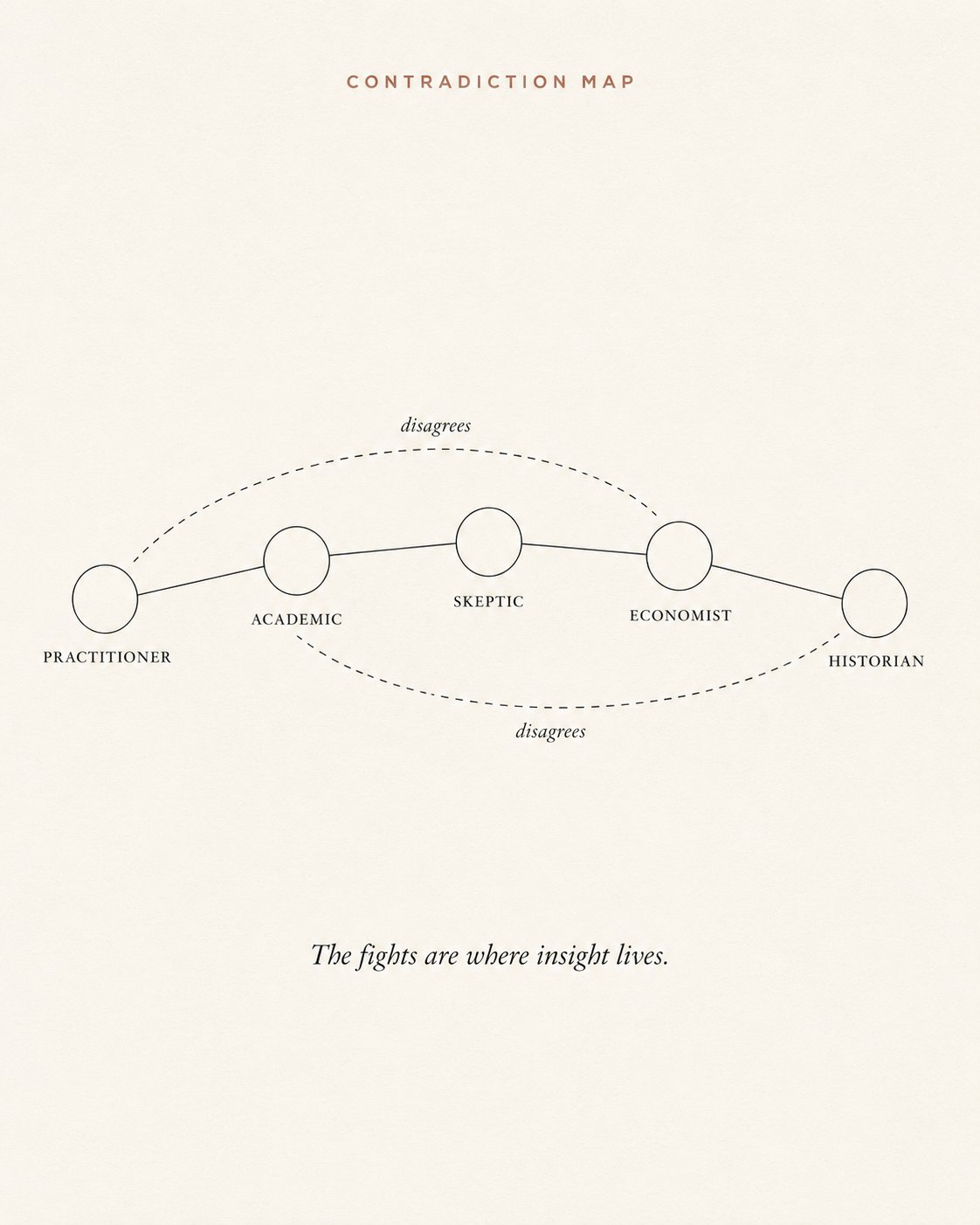
Now make Claude find where the 5 voices fight. The fights are where real understanding lives.
现在让Claude找到那五种声音交锋之处。战斗之处,才有真正的理解。
Based on the 5 perspectives above, map the contradictions:
1. Where do two or more perspectives directly contradict
each other? List each conflict with the specific claims
that clash.
2. Which perspective has the strongest evidence?
Which has the weakest? Why?
3. What is the one question that, if answered, would
resolve the biggest contradiction?
4. What does EVERY perspective agree on?
(This is likely true. Even opponents confirm it.)
5. What topic did NONE of the perspectives address?
(This is the blind spot in the whole field.
Often the most valuable finding.)
What comes back: a map of where experts disagree and why. Most people skip this step. It is the step that separates surface understanding from real expertise.
**得到的结果是:**一张专家们分歧所在及其原因的图谱。大多数人跳过了这一步。而正是这一步将肤浅的理解与真正的专业知识区分开来。
If all 5 perspectives agree, it is probably true. If nobody addressed a topic, you just found the gap in the entire field.
如果所有五个观点都一致,那它很可能是真的。如果没有人讨论过某个话题,那你恰好找到了整个领域的空白。
Phase 5: Prompt 3, The Synthesis
阶段5:提示3,综合
Now make Claude pull everything together into a research briefing.
现在让Claude把所有内容整合成一份研究简报。
Synthesize everything from the 5 perspectives and the
contradiction map into a research briefing:
1. THE ONE PARAGRAPH SUMMARY: explain this topic as if
briefing a CEO who has 60 seconds and needs nuance,
not just the headline.
2. THE 5 KEY FINDINGS: most important things I now know,
ranked by reliability. For each, note which perspectives
support it and which challenge it.
3. THE HIDDEN CONNECTION: one non obvious link between
findings that only shows up when you look at all 5
perspectives together.
4. THE ACTIONABLE INSIGHT: based on all the evidence,
what should someone in [YOUR ROLE] actually DO
differently? Be specific.
5. THE FRONTIER QUESTION: the one question that, if
answered, would change everything about how we
understand this topic.
What comes back: a briefing no single expert could write. It accounts for every angle, names the contradictions, ranks reliability, and lands on a specific action. This is what a PhD student would produce in 48 hours. You just got it in 90 seconds.
最终产出: 一份任何单一专家都无法独立完成的简报。它覆盖了所有角度,点明了矛盾之处,评估了可靠性,并得出一个具体的行动方案。这是博士生花48小时才能完成的内容——而你在90秒内就拿到了。
Phase 6: Prompt 4, The Peer Review
阶段6:提示4,同行评审
STORM has one known weakness. Stanford’s own researchers flagged it. The system does not self critique. Source bias and fact misassociation sneak in. This prompt fixes that by making Claude grade its own work.
STORM有一个已知的弱点。斯坦福的研究人员自己指出了这一点。该系统不会进行自我批评。来源偏见和事实误关联会悄悄潜入。这个提示通过让Claude评估自己的工作来修复这个问题。
Now peer review your own research briefing:
1. CONFIDENCE SCORES: rate each of the 5 key findings
on a 1 to 10 scale for reliability. Explain each score.
2. WEAKEST LINK: which claim are you least confident in?
What specific info would you need to verify it?
3. BIAS CHECK: which perspective might be overrepresented
in your synthesis? Did one voice dominate?
4. MISSING PERSPECTIVE: is there a 6th angle I should
have included that would change the conclusions?
5. OVERALL GRADE: if a Stanford professor reviewed this
briefing, what grade would they give and why?
What would they tell me to fix?
What comes back: an honest read of your own research. Strong claims, weak claims, biases, missing angles. Real peer review takes months. You just did it in 60 seconds.
回归本质: 诚实地审视自己的研究——哪些是强论证、哪些是弱论证、存在哪些偏见、遗漏了哪些视角。真正的同行评审需要数月,而你刚刚在60秒内就完成了。
Phase 7: The 5 Minute Workflow
阶段7: 5分钟工作流
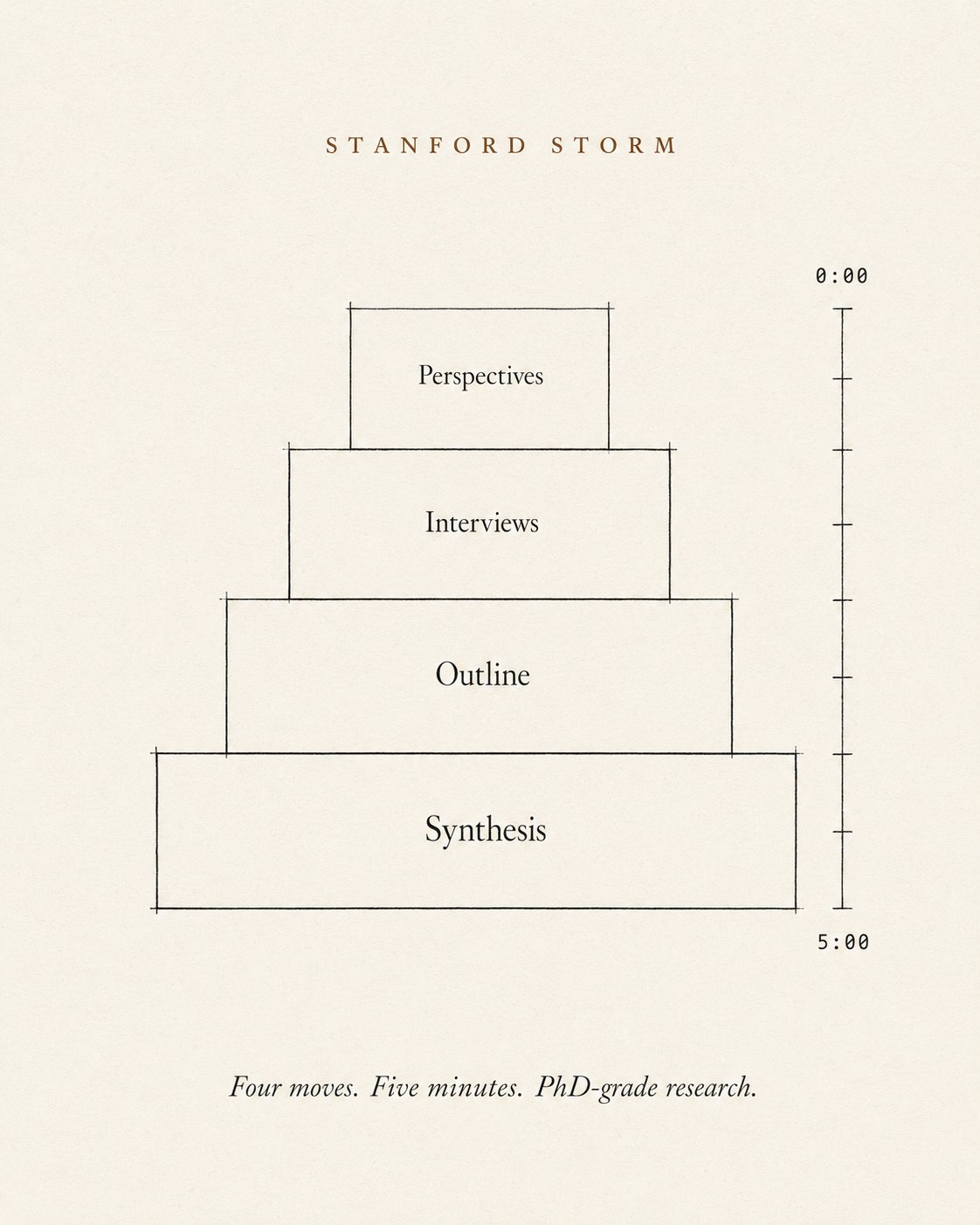
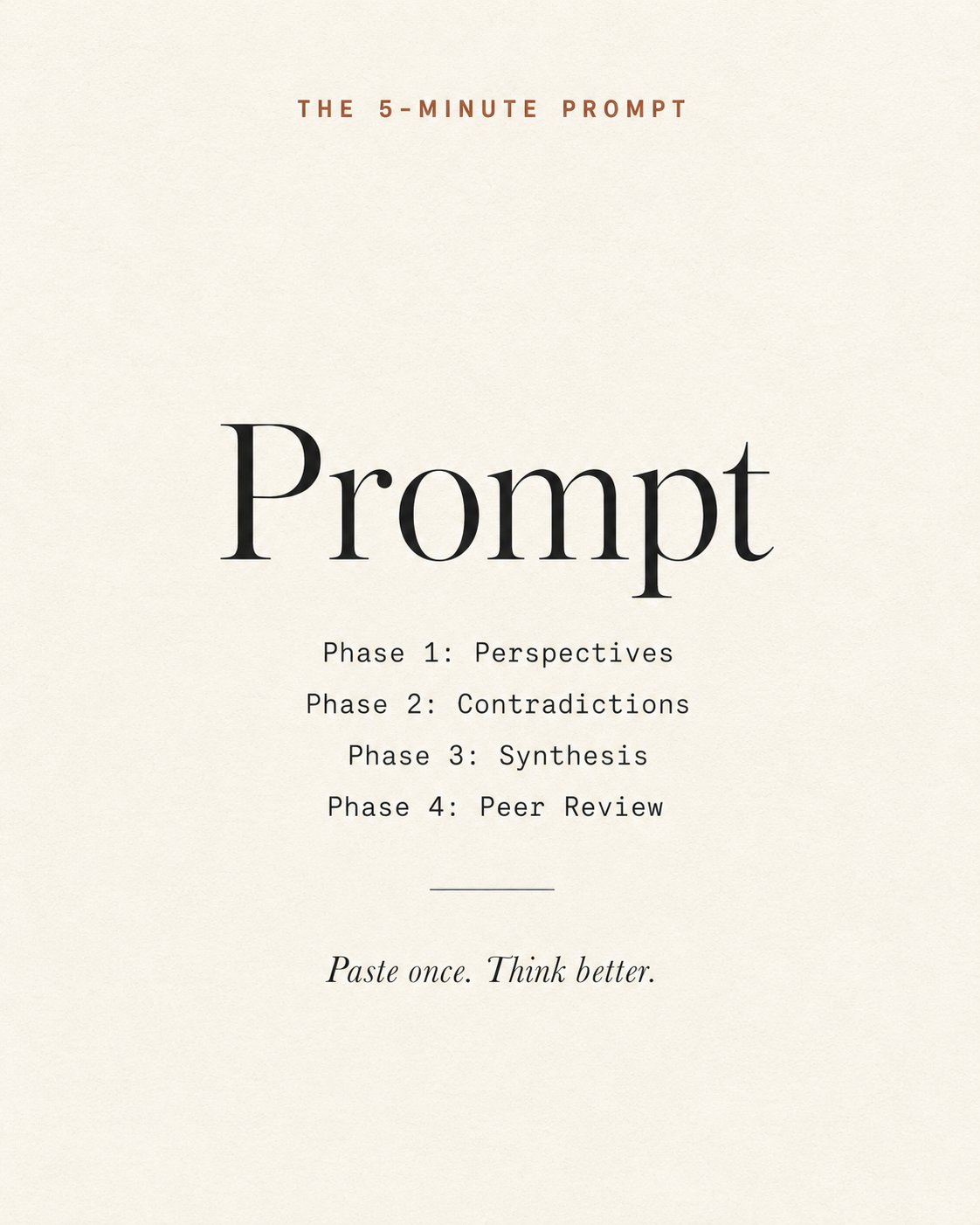
Minute 1: Prompt 1. You have 5 expert views.
第1分钟: 提示1. 您有5个专家观点。
Minutes 2 to 3: Prompt 2. You have a contradiction map.
第2到3分钟: 提示2. 你有一个矛盾图。
Minutes 3 to 4: Prompt 3. You have a research briefing.
第3至4分钟: 提示3. 你有一份研究简报。
Minute 5: Prompt 4. You know what is reliable and what is not.
第5分钟: 提示4. 你知道什么是可靠的,什么不是。
Total time: 5 minutes. Output: a multi perspective briefing with contradiction analysis, synthesis, a specific action, and a reliability score.
总时间:5分钟。输出:一份多视角简报,包含矛盾分析、综合、一项具体行动以及可靠性评分。
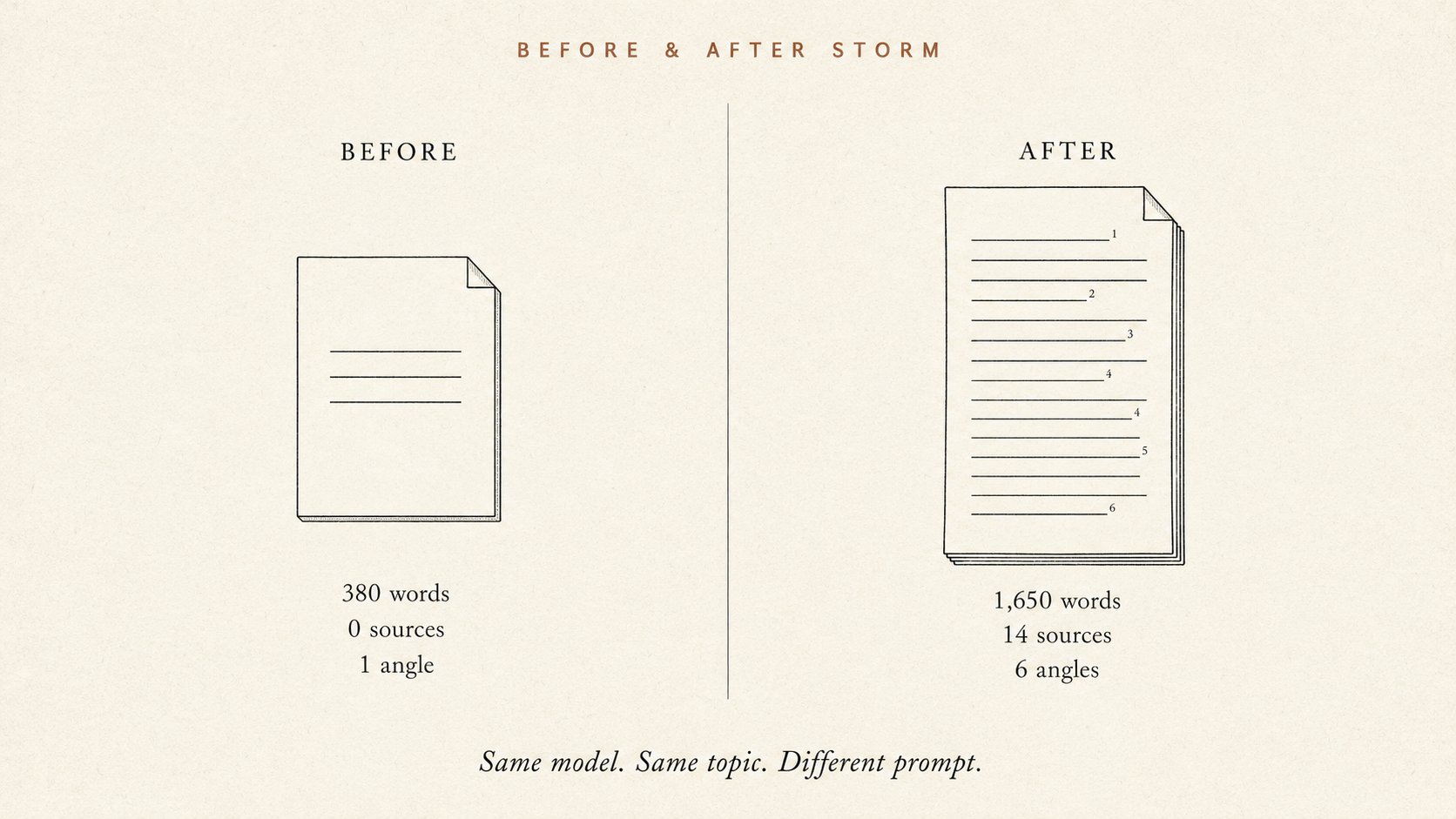
A PhD student takes 40 to 60 hours to produce this by hand. Not because they are slow. Because reading from 5 angles, mapping contradictions, synthesizing, and self critiquing is genuinely a 40 hour job for one human brain.
一名博士生手动完成这项工作需要40到60小时。不是因为他们速度慢。而是因为从五个角度阅读、梳理矛盾、综合并自我批判,对于单个人脑来说确实需要40小时的工作量。
Phase 8: 7 Ways to Use This Starting Today
阶段 8:今天起即可使用的 7 种方法
1. Before writing any article or report. Run the 4 prompts. Your piece will cover angles nobody else thought of.
1. 在撰写任何文章或报告之前。 运行这4个提示。你的作品将涵盖别人未曾想到的角度。
2. Before a major business decision. Get all 5 perspectives. The practitioner tells you what works in reality. The skeptic tells you what could go wrong. The economist tells you who profits.
2. 在重大商业决策之前。 获取全部5种视角。实践者告诉你现实中什么有效。怀疑者告诉你什么可能出错。经济学家告诉你谁获利。
3. Before a job interview. Research the company from 5 angles in 5 minutes. The practitioner view gives you insider language. The skeptic view gives you sharp questions. You walk in more prepared than anyone in the room.
3. 求职面试前。 花5分钟从5个角度研究公司。实践者视角让你掌握内部语言,怀疑者视角则提供尖锐的问题。你走进面试室时,会比在场任何人都准备得更加充分。
4. Before investing. Bull case, bear case, historical parallel, incentive map, academic evidence. In 5 minutes. The contradiction map shows where the actual risk lives.
4. 投资前. 牛市案例、熊市案例、历史类比、激励图、学术证据。5分钟内。矛盾图显示了实际风险所在。
5. Before learning a new skill. Map the field from 5 angles. The practitioner tells you what to learn first. The academic tells you the theory. The skeptic tells you what is overhyped. You skip the noise.
5. 在学习新技能之前。 从5个角度绘制领域地图。实践者告诉你先学什么。学者告诉你理论。怀疑论者告诉你什么被过度炒作。你绕过噪声。
6. Before a negotiation. Research the other side from 5 perspectives. Understand their incentives, weaknesses, historical behavior. You walk in with structural advantage.
6. 在谈判之前。 从5个方面研究对方。了解他们的动机、弱点和历史行为。你进入谈判时,将拥有结构性优势。
7. Before any presentation. Run STORM on your topic. Your slides will answer objections before the audience raises them. Your Q and A will feel effortless.
7. 在每次演讲之前。 针对你的主题运行 STORM。你的幻灯片将在听众提出质疑前就给出回应。你的问答环节将显得毫不费力。
The Persona Block
角色块
You are someone who reads. You ask hard questions. You do not want a 200 word summary that sounds smart but says nothing.
你是一个读书人。你会提出尖锐的问题。你不想要一段听起来很聪明却毫无内容的200字总结。
You want to actually understand things. Quickly. With sources. The way a Stanford grad student would. Without the six year tuition bill.
你想要真正理解事物。快速地。有来源。像斯坦福研究生那样。却无需六年的学费账单。
That is who this method is for.
这就是这个方法所针对的对象。
If that is you, save this article. Use the 4 prompts. Watch the difference.
如果那个人是你,请保存这篇文章。使用这4个提示。看看有什么区别。
The Uncomfortable Truth
令人不安的真相
Here is what nobody is saying out loud.
这是没人公开说出来的事。
The Stanford team published this in 2024. The paper is peer reviewed. The code is open source. The live tool is free. The method is four prompts. And almost nobody uses it.
斯坦福团队在2024年发表了这项成果。该论文经过同行评审。代码是开源的。在线工具免费使用。该方法只需四个提示词。然而几乎无人使用。
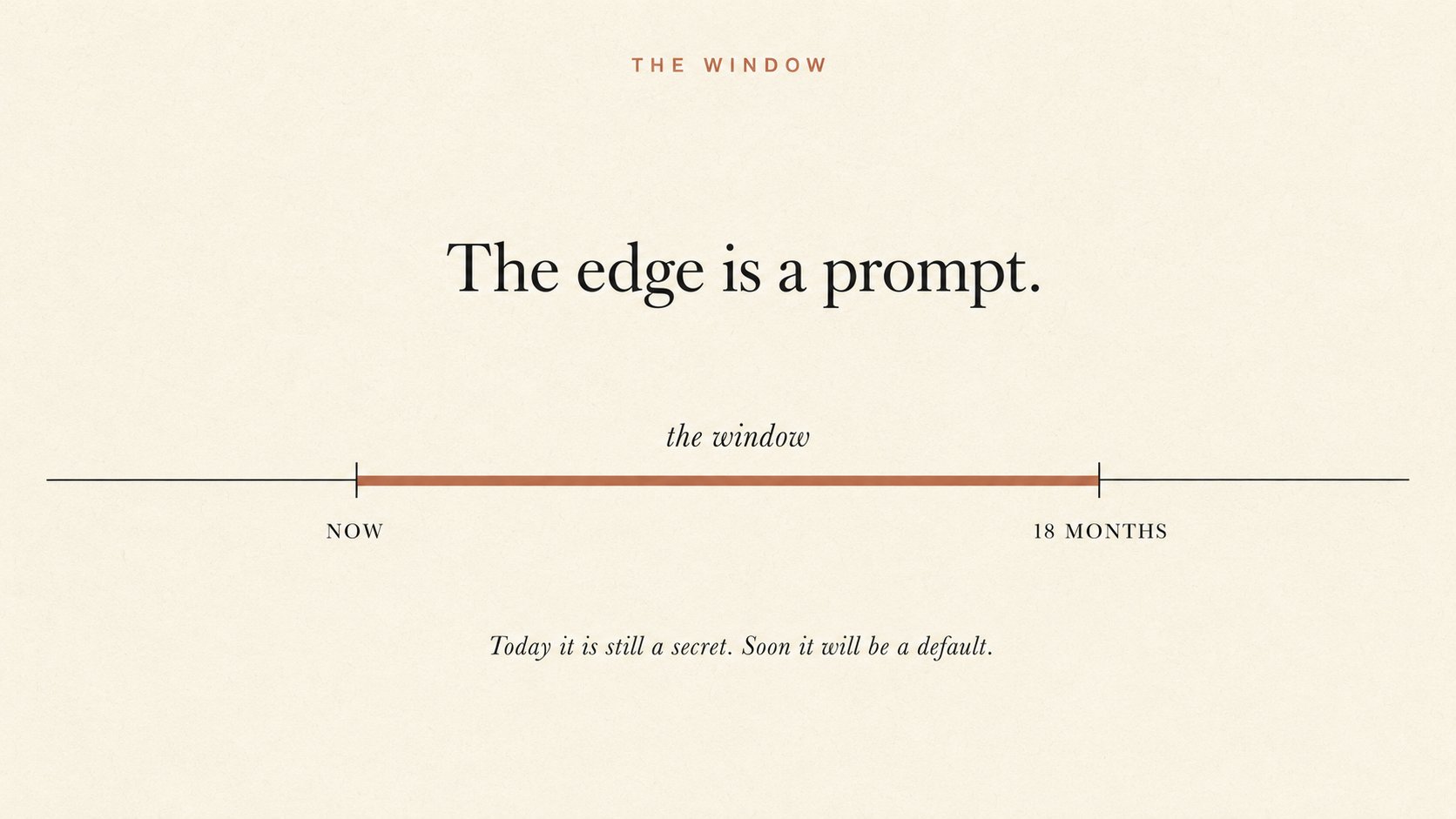
We are in an 18 month window. The people who learn how to research with AI properly will out think the people who do not. By a lot. Not because they are smarter. Because they are running 5 perspectives, a contradiction map, a synthesis, and a peer review while everyone else is reading the first Google result.
我们正处于一个18个月的窗口期。那些学会正确利用AI进行研究的人,将远胜于那些不会的人。差距巨大。不是因为更聪明,而是因为他们同时运用5种视角、一张矛盾地图、一份综合结论和一次同行评审,而其他人还在读第一个谷歌结果。
In 18 months, this kind of workflow will be baked into every tool. The edge will be gone. Today it is still a secret hiding in plain sight.
18个月后,这种工作流将融入每个工具。优势将不复存在。而今天,它仍是公开的秘密。
Pick the topic you need to research most. Open Claude. Paste Prompt 1.
选择你最需要研究的主题。打开Claude。粘贴Prompt 1。
Five minutes from now you will know more than people who spent days reading.
五分钟后,你将比那些花了几天时间阅读的人了解得更多。
The prompts are above. Stanford proved the method. The rest is up to you.
上述提示。斯坦福证明了该方法。剩下的就靠你了。
hope this was useful. Nav ❤️
希望这对你有帮助。Nav ❤️